ARABIAN NIGHTS ILLUSTRATED 1800-1950
About
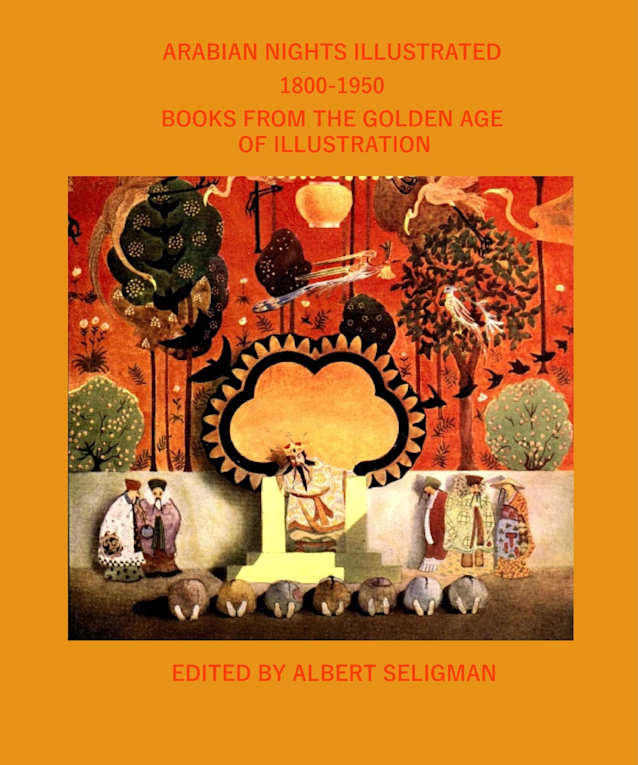
This is a guided tour of the illustrated editions of ‘The Arabian Nights’, also called ‘The Thousand and One Nights’, published in England and America between 1800 and 1950. It begins with one of the earliest editions illustrated in 1802 by English artist Robert Smirke, who painted especially for inclusion in books. Following are the earliest attempts to print color plates, made from tin or copper, through the beginnings of wood blocks and photographic reproduction.
Featured are the most famous artists and illustrators of the Victorian and Golden Age, including John Gilbert, famous for his Dickens illustrations, William Harvey who engraved the woodblocks by hand, FOC Darley, the first American Brandywine illustrator and Walter Crane, whose his full- color woodblocks date the beginning of the Golden Age illustrators.
Modern 20th century editions include Edmund Dulac, Arthur Rackham, Kay Nielsen, Willy Pogany, Maxfield Parrish, the three Robinson brothers; William Heath, Thomas Heath and Charles, René Bull, Charles Folkard, Gustave Doré, Frances Brundage, JD Batten, William Strang, HJ Ford, George Soper, Helen Stratton, Walter Paget, Virginia F Sterrett, Eric Pape, Thomas Mackenzie and many others.
The illustrated stories include are ‘Aladdin, and the Wonderful Lamp’, ‘Sinbad the Sailor’, ‘Ali Baba and the Forty Thieves’, ‘The Enchanted Horse’, ‘Prince Ahmed and the Fairy Peri Banou, and many other favorites of the 1001 tales.
Praise for this book
I have just read Albert Seligman’s survey of many published versions of One Thousand and One Nights, more commonly known as the Arabian Nights, published over a 150-year period. His book, Arabian Nights Illustrated, 1800-1950, is far more than just a book of pictures. It presents a well-written history of the large number of illustrators who have presented their visual interpretations of the Arabian Nights stories. Although I’ve collected illustrated books for over 40 years, I still discovered, in Seligman’s book, many books and illustrators that were new to me.
Starting in 1802, each illustrated edition is accompanied by the highest quality images including, where available, those for book covers, title pages and illustrations. Also included are many interesting comments about the illustrator and publisher of each edition. The readers of this book, both experienced collectors and those new to the world of book illustration, will find illustrators and books that they will want to explore further.
After presenting a mouth-watering selection of illustrated editions of the Arabian Nights for 111 pages, the author presents an unusual bibliography at the end, one that presents a list, not of the books, but of the 28 internet websites where he obtained the information and images presented in his book. This will enable all readers of Seligman’s book to immediately begin an internet exploration of the fascinating world of book illustration